
Google’s US$15 Billion Malaysia Data Centre Plan: What Is Promised, What Is Projected
Google plans to invest US$15 billion (RM61 billion) in Malaysia during 2027 and 2028 to expand its data centre and cloud operations. The company announced the figure on 4 November 2026 at the Mantap Malaysia Bersama AI event at Universiti Malaya, where Ruth Porat, Alphabet and Google’s president and chief investment officer, spoke and Prime Minister Anwar Ibrahim was present.
The detail comes from media accounts of Google’s statement rather than a published filing, which is why the distinction between commitments and forecasts runs through this report.
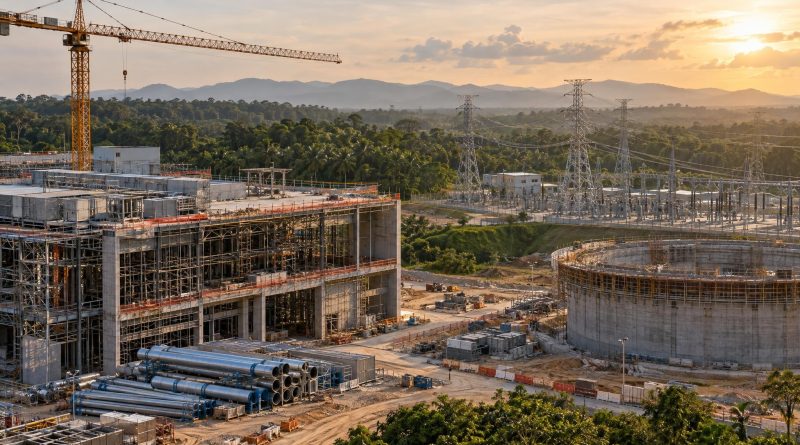
The spending covers expansion of Google’s existing campus at Elmina Business Park in Selangor plus new campuses in Selangor and Negeri Sembilan. Elmina opened in 2024 and is operational, and the new money builds on a US$2 billion commitment announced in May 2024 that included the first data centre and a Google Cloud region.
Media Selangor, the Selangor state government’s official media agency, reported that two further Selangor campuses are still being planned, at Eco Business Park in Puncak Alam and UMV High Value Manufacturing Park in Serendah. Ken Siah, a principal at Google Asia Pacific Global Infrastructure, described the arrangement with Elmina as a strategic triangle.
Jobs and GDP: forecasts, not results
Google projected that construction in 2027 and 2028 would add an annual average of US$1.1 billion to Malaysia’s GDP and support more than 37,000 local jobs a year, with average annual labour income of US$378 million; about 6,000 of those jobs are expected to be in construction. Once the campuses operate, it projects more than 9,000 local jobs a year at wages averaging 45 per cent above the national median.
No independent economic modelling or post-build employment data accompanies them, and Google’s count, as reported by the New Straits Times, includes construction work, contractor roles with local suppliers and jobs in businesses serving employees and their families. It measures supported activity, not the number of technicians inside the server halls.
Power, water and the conditions attached
Google plans to work with Tenaga Nasional Berhad to add more than 1 gigawatt of clean energy capacity to the national grid, including new generation under the Corporate Renewable Energy Supply Scheme. It says it will pay for 100 per cent of the electricity its campuses consume and for the direct infrastructure costs of connecting to the grid, an arrangement Anwar described, as reported by The Sun, as Google paying fully for its own power without public subsidy.
On water, Google plans an off-river storage reservoir and treatment plant in Negeri Sembilan, expected to supply 65 million litres of treated water a day, with ownership passing to the state government on completion. The Sun reported a separate announcement on 2 November 2026 of US$160 million for a plant along the Linggi River, with Gamuda appointed to build it. Anwar said the plant was designed to reduce monsoon flood risk, secure dry-season reserves and widen access to free drinking water.
Asked whether Google had done enough on environmental concerns, Anwar said the government had imposed conditions and the company had accepted them, according to The Sun and Malay Mail. Neither report sets out what those conditions are, and none carries a Google statement confirming them, so the claim rests on the Prime Minister’s remarks.
The New Straits Times reported the company as putting the power usage effectiveness (PUE) of its Malaysian campuses at 1.12 to 1.14, against an industry average of 1.54, and as promising quarterly figures for each site once fully operational. PUE compares total facility energy use with the energy delivered to computing equipment, so a lower figure means less overhead. The same outlet reported Google as saying its water risk assessments in Selangor and Negeri Sembilan found local watersheds were not at high risk of scarcity or depletion, which informed the decision to use water cooling.
Data residency and the three-site design
Ken Siah said building data centre infrastructure inside Malaysia mattered for data residency requirements, particularly in regulated industries such as banking and the public sector, where certain data must remain within the country’s borders. He also said local infrastructure would provide ultra-low latency for applications such as smart factories, intelligent traffic systems and robotics.
Those remarks describe design intent and a stated rationale. They do not establish that particular legal obligations bind Google’s customers, that failover between campuses has been tested, or that any latency target has been met. Media Selangor, which reported them, is state-linked. The New Straits Times separately reported Google as saying computing capacity in Selangor would support its upcoming Google Cloud region for enterprise customers.
Siah also set out how the three sites are meant to work together: once all are online, services could move to either of the other two campuses if one were temporarily out of service. That is a stated capability rather than a demonstrated result.
Skills, suppliers and the wider buildout
Google announced four programmes intended to upskill 800,000 Malaysians between 2027 and 2031, aimed at educators and youth, microentrepreneurs, civil servants and vocational jobseekers. It says it works with more than 80 Malaysian entities across its domestic supply chain, from construction and civil engineering to network infrastructure, power and cooling components, and logistics. The 800,000 figure is a target, and the reporting gives no measure of progress against it.
Wider context matters here. AFP, citing the market intelligence firm DC Byte, reported that Malaysia accounts for more than half of the data centre capacity under construction in South-east Asia, which helps explain why power and water commitments carry weight.
What remains open
The 4 November announcement sets out a spending window, a site plan and a set of commitments. It does not settle the full campus list or the launch date of the Google Cloud region, and the reporting does not include independent verification of the GDP, jobs, wage, PUE or water risk figures.
The new generating capacity and the Negeri Sembilan water plant are physical commitments that can be compared with what is built, and quarterly efficiency disclosures, once campuses are running, would let outsiders test the PUE claims. The jobs, GDP and wage projections will need independent assessment before they can be read as outcomes rather than forecasts.
If a cloud region is built inside a country’s borders, what has actually been guaranteed? Data residency is a design claim about where data sits, and it only becomes useful when you can also say who operates each layer beneath it and what happens when one site goes dark. Cloud security is the area of study that makes those boundaries examinable: how responsibility for data and infrastructure is divided between a provider and its customers, what a region and its failover actually describe, and why a stated capability is not the same as a tested one. The Hack Academy’s online cybersecurity training programme lists cloud security among its subject areas, with self-paced learning and practical exercises alongside the theory, so you can work through those questions at your own pace.