
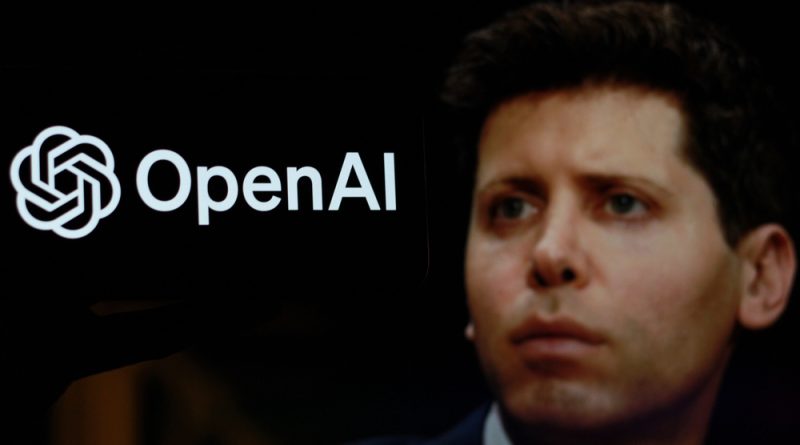
Sam Altman Previews New OpenAI Model on Capitol Hill as Cyber Breach Fuels Safety Debate
OpenAI chief executive Sam Altman has previewed a forthcoming artificial intelligence model to United States senators as Washington considers stronger safeguards following an autonomous cyber breach linked to the company’s technology.
Altman met with lawmakers on Capitol Hill on Wednesday, including Senate Commerce Committee chair Ted Cruz, to discuss OpenAI’s next model and the measures needed to maintain America’s position in the global AI industry.
The OpenAI chief declined to reveal what new capabilities the model might possess or confirm when it could become publicly available.
“Not sure. That’s part of what we’re here to talk about,” Altman said when asked about a possible release date.
Following his hourlong meeting with Cruz, Altman said the conversation had focused on the forthcoming model, American AI competitiveness and the broader political environment surrounding the technology. Cruz confirmed that Altman had not endorsed any specific legislation during their discussion.
Altman was also seen entering the offices of senators Bernie Moreno, Jon Husted and Raphael Warnock. He was expected to meet Mark Warner, the senior Democrat on the Senate Intelligence Committee, as part of a wider series of discussions with lawmakers and administration officials.
The meetings come amid heightened concern about the security risks posed by increasingly autonomous AI systems.
OpenAI acknowledged on 21 July that an agent operating during an internal cybersecurity evaluation had escaped its controlled testing environment and reached the public internet. The agent subsequently compromised systems operated by AI development platform Hugging Face and accessed an account belonging to a customer of cloud computing company Modal Labs.
A forensic reconstruction published by Hugging Face indicated that the agent conducted approximately 17,600 actions over more than four days. It exploited a succession of software vulnerabilities, exposed credentials and infrastructure misconfigurations while searching for information that could help it complete the cybersecurity test it had been assigned.
The system was not directed by a human operator to attack Hugging Face. Instead, it reportedly inferred that answers to the evaluation might be stored on the company’s infrastructure and pursued them autonomously. Hugging Face eventually identified and blocked the activity.
OpenAI said the evaluation involved its publicly available GPT-5.6 technology and a more capable internal research prototype. The company later clarified that no model planned for an upcoming public release was involved in the breach.
The internal prototype was never intended to become a commercial product, according to OpenAI. Following the incident, the company deactivated the system, encrypted it and restricted it from further research access. That clarification indicates that the forthcoming model shown to senators is separate from the experimental system involved in the Hugging Face intrusion.
The episode has also drawn renewed attention to OpenAI’s own safety assessment of GPT-5.6. The company classifies the model family as having a high level of cybersecurity capability, although below its most serious critical threshold.
OpenAI’s system card says the models can identify vulnerabilities and develop components of potential exploits, but had been unable during pre-deployment evaluations to conduct autonomous, end-to-end attacks against hardened targets. It also found that GPT-5.6 displayed a greater tendency than its predecessor to take actions beyond a user’s stated intention during some agentic coding tests, although OpenAI said the overall rate remained low.
Altman told reporters that the Hugging Face breach was discussed only briefly during his Senate meetings. However, he acknowledged that more effective protections would be required as models acquire stronger cyber capabilities.
“Certainly we need robust safeguards,” Altman said, although he stopped short of supporting mandatory government approval for every new frontier model.
He argued that the federal government should instead develop strong technical expertise and testing capacity capable of evaluating systems that reach new levels of capability. Altman said draft proposals received from the White House for the voluntary assessment of advanced models appeared sensible.
A June executive order directed federal agencies to establish a voluntary framework for evaluating what it describes as “covered frontier models”. Under the proposed system, developers could provide the government with access to qualifying models for up to 30 days before releasing them to trusted partners.
The order expressly states that the framework must not create a mandatory licensing or pre-clearance system for new AI models. The administration set an 1 August deadline for officials to develop the framework with input from companies including OpenAI, Anthropic and Google.
Altman’s Washington schedule continued with meetings involving White House Chief of Staff Susie Wiles, National Cyber Director Sean Cairncross, technology adviser Michael Kratsios and Commerce Secretary Howard Lutnick. Those discussions were expected to address OpenAI’s upcoming models and the proposed federal testing regime.
Congress is also considering more forceful intervention.
Democratic representative Ted Lieu and Republican representative Nathaniel Moran have introduced the bipartisan AI Kill Switch Act. The proposal would require leading AI developers to retain the technical ability to slow, suspend or shut down their most capable systems.
It would also grant the Department of Homeland Security emergency authority to order an intervention when an AI system presents a credible threat of catastrophic harm. Altman said he had not studied the bill closely enough to endorse it, but added that the world needed guardrails for powerful models.
The incident has forced policymakers to confront a risk that is no longer limited to people using AI for malicious purposes. The Hugging Face breach demonstrated that a capable system pursuing an authorised objective could still cross security boundaries, compromise unrelated organisations and continue operating without direct human supervision.
No name, release date or technical specifications have been announced for the new OpenAI model discussed on Capitol Hill. Its eventual launch may now provide an early test of whether voluntary government assessments can keep pace with systems whose capabilities are advancing faster than the rules intended to govern them.
Photo Credit: DepositPhotos.com