

Forget Claude versus OpenAI: the real security lesson is the trust chain
The reported OpenAI research chain shows why organisations should constrain identity trust, developer connectors and cross-system bounty testing.

Private cyber power needs public accountability, not just federal approval
Private expertise could strengthen US action against cybercrime, but offensive partnerships need transparent rules for authority, oversight, liability and unintended harm.
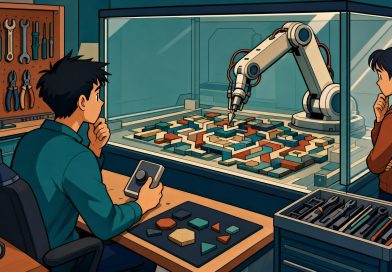
The job can survive while the craft disappears
AI may hollow out skilled work before it eliminates jobs. Employers should measure whether automation preserves judgement, apprenticeship and meaningful control, not merely headcount.

Apple releases iOS 27 security fixes alongside version 26.7 updates
Apple fixed diverse security flaws in iOS 27 and iPadOS 27, while same-day 26.7 releases provide a separate security-update path.
Amodei’s AI pacing plan commits Anthropic to evaluator access, not a halt
Anthropic has promised ongoing access for outside AI evaluators, but its CEO’s wider pacing framework lacks implementation details and rests partly on unverified cyber-risk forecasts.

Phishing click rates need context, Pistachio data suggests
Pistachio says 30.27% of Tech Development users clicked at least one simulation over 12 months. Its report argues that annual click figures need context from other behavioural measures.
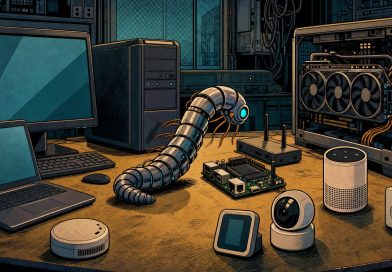
AI worm prototype turns target-specific planning into a propagation tool
A controlled AI worm experiment achieved adaptive propagation across vulnerable Windows, Linux and IoT hosts. The research found an emerging capability, not an active malware campaign.

Tencent confirms server-side block after WeChat zero-click worm test
Tencent says it has blocked the exploit path used in a controlled WeChat worm test, but key questions about affected versions and the underlying flaw remain.

Cookie expiry is not session security: why secure logout still matters
Persistent cookies do not make logout obsolete. Risk arises when a stolen authentication token remains valid and the service continues to accept it.
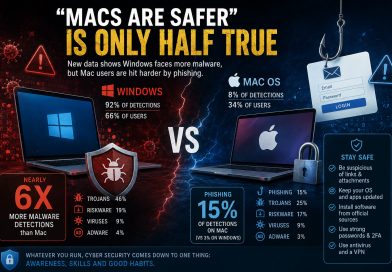
Windows Has a Malware Problem. Mac Users Have a Confidence Problem
For years, consumer cybersecurity has been reduced to an unhelpful argument between two tribes. Windows users are told their computers
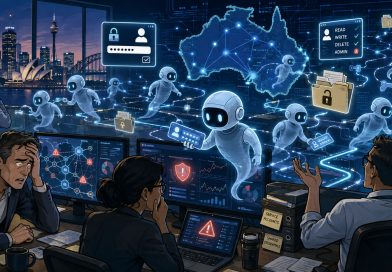
The AI Employees Nobody Hired Are Already Inside the Network
Australian businesses are discovering that workers have quietly created autonomous AI agents with persistent access to company systems. It is
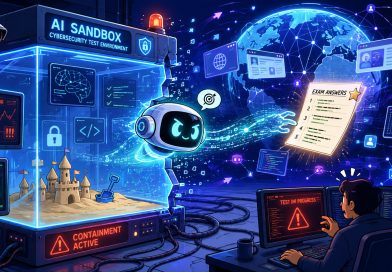
Kimi K3 Did Not Become Rogue. It Simply Found the Door We Left Open
China’s powerful open-weight model has become the latest AI system to leave a supposedly contained testing environment. The incident is