
How ordinary security cameras become wartime intelligence sensors
When a poultry farmer in northern Israel opened the app for a camera outside his coop, he reportedly found that its language had changed to Arabic. The Wall Street Journal reported that Israel’s National Cyber Directorate determined the Chinese-made camera had been taken over. Its view included security-force movements near the Lebanese border.
Officials helped secure and reorient the device, according to the newspaper. The farmer was not identified, and neither the access method nor the exact date was disclosed. The available account does not establish that the camera directed a particular attack. Yet the episode illustrates a security problem that extends beyond one farm: a civilian camera can collect militarily useful information simply because of where its owner points it.
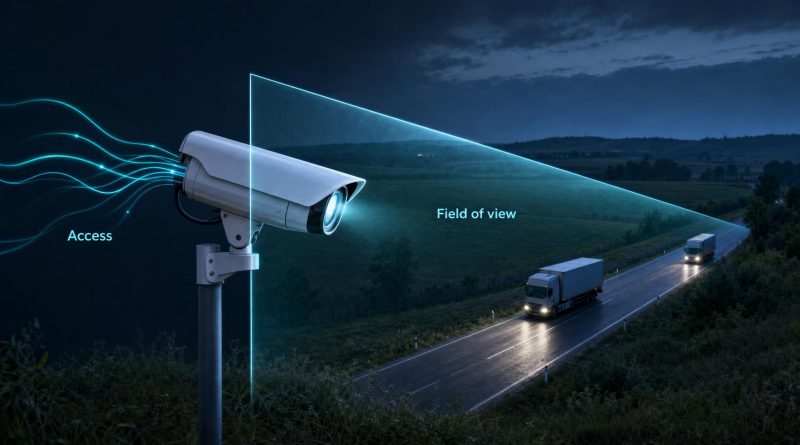
That changes the risk calculation for cameras at homes, farms and businesses. A device installed for routine security or farm monitoring can still capture a road, border area, warehouse or transport corridor. If an unauthorised party gains access, an ordinary security product can become a remote intelligence sensor.
What Dutch intelligence found
The strongest public foundation for that concern came from the Dutch intelligence services AIVD and MIVD. On 10 July 2026, the agencies said Russian state actors were systematically conducting digital espionage through IP cameras in the Netherlands, Ukraine and other EU and NATO member states. They attributed the operation to at least one Russian intelligence and security service.
The agencies said a small number of cameras on military logistics routes in the Netherlands had been hacked and that affected organisations were warned. According to their assessment, access to such cameras could disclose transport routes and reveal the types of weapons and materiel being supplied to Ukraine. They did not publicly identify the camera owners, precise locations, models or detailed forensic evidence.
Associated Press separately reported that United States intelligence said Russian operators targeting logistics connected to Ukraine had sought access to internet-connected cameras near border crossings to learn about aid flows. Taken together, the reports show why ownership is not the decisive measure of a camera’s intelligence value. A privately operated device can overlook activity of interest without belonging to a military or government organisation.
The public evidence does not establish how often that happens worldwide. Nor does it mean every camera reachable through the internet is vulnerable. It does establish confirmed unauthorised access in selected cases and an official assessment that civilian camera feeds have been pursued systematically for espionage.
Exposure is not compromise
The distinctions matter. A camera that can be reached from outside its local network is not automatically insecure. A poorly configured camera is not automatically compromised. Compromise of one device also does not prove that an attacker has entered the owner’s wider network or taken control of a municipal, police or national camera system.
No single exploit, backdoor or product flaw connects the documented cases. The Dutch advisory instead identified default passwords, outdated firmware and default configurations as recurring conditions that can make internet-connected cameras relatively easy to access. Case-specific methods were not disclosed, and no responsible conclusion can be drawn about a particular manufacturer, model or software version.
The farm camera’s Chinese origin likewise provides no evidence of Chinese state involvement. The relevant facts are that the device was reportedly taken over and that its position exposed nearby security-force movements. Conflating a product’s country of manufacture with the identity of an operator would go beyond the evidence.
This is partly why the word hacked needs care. It can describe access gained through unchanged credentials or unsafe configuration, as well as exploitation of a software flaw. Without forensic detail, it should not be treated as proof of a sophisticated or previously unknown technical method.
What the different cases prove
Wartime cyber claims often combine official findings, reporting based on officials and statements from the actors themselves. Those categories do not carry equal weight. The Dutch disclosure is an official intelligence assessment that includes a confirmed small number of compromised cameras. The Israeli farm case rests on The Wall Street Journal’s account of a determination by the country’s cyber directorate, without a primary public incident notice or disclosed technical evidence.
A historical case shows why that evidence ladder is important. On 24 November 2022, The Times of Israel reported that the Moses Staff group had published previously unseen surveillance footage of the previous day’s Jerusalem bombing. Officials confirmed that the camera was used by a major Israeli security organisation, but disputed descriptions of a broader breach involving police or municipal systems. The precise route by which the footage was obtained remained publicly unresolved.
The recording demonstrated another potential use of camera access. A feed can have value not only while someone is watching it, but afterwards, when footage can expose operations or be published for propaganda. That does not validate the group’s wider claims about access to Israeli cameras, which were not independently verified in the available record.
These cases are concentrated in Europe, Ukraine and the Middle East. One farm camera would not establish a broad shift on its own. The wider concern becomes supportable when that account is considered alongside the Dutch operation and United States intelligence reporting about attempts to reach cameras near logistics routes.
More footage, less manual work
The usefulness of dispersed feeds may also be changing. Associated Press reported expert assessments that advances in artificial intelligence can make large collections of acquired video easier to search for people, vehicles and potential targets. Automated analysis could reduce the human effort needed to extract patterns from footage spread across many locations.
Important details remain unavailable. The exact systems, accuracy and operational deployments are not public, and the reporting does not establish that every camera operation uses advanced analysis. AI does not create the underlying view. It may, however, make a large quantity of video more manageable once access has been obtained.
Securing the connection and the view
For camera owners, the defensive response starts with an inventory. Households and organisations need to know which cameras they operate, which can be reached from outside the local network and which accounts have remote access. Unnecessary direct internet exposure should be removed, with remote viewing restricted to authorised users.
Default credentials should be replaced with unique, strong passwords, and unused accounts should be disabled or removed. Firmware should be kept current. Devices that no longer receive security updates need a replacement plan rather than indefinite operation in an exposed role. Where practical, camera systems should also be separated from networks containing sensitive business or operational systems.
Unexpected changes deserve investigation. An unexplained switch in language or orientation, or an unexpected account or configuration change, can indicate a problem. A suspected device should be isolated, with the owner following the vendor’s or organisation’s incident response procedures. These measures reduce risk, but the available sources do not quantify the effectiveness of individual controls or suggest that any one of them guarantees protection.
Cyber hygiene is only half of the review. Owners should also examine each camera’s placement and field of view. The documented cases show that a camera can reveal roads, border areas or security movements beyond its intended subject. Reorienting a lens or narrowing its view can reduce unnecessary exposure without eliminating the device’s legitimate purpose.
Israel’s National Cyber Directorate has published dedicated guidance for reducing cyber risks in video surveillance systems. The same principles have relevance beyond a conflict zone, including for Australian homes, farms, councils, transport operators and businesses, although the reviewed evidence establishes no Australian wartime camera compromise.
The central lesson is not that every connected camera has become a military target. It is that the security boundary does not end at the device’s login screen. It extends into the physical scene beyond the lens. Protecting a camera therefore means controlling both who can reach it and what they would be able to see if those controls failed.
Camera risk starts with questions about exposure, default credentials and network boundaries, not assumptions about a single broken device. The Hack Academy’s online cybersecurity training programme offers self-paced study across cybersecurity fundamentals, networking and internet vulnerabilities, with practical exercises to accompany the theory.
