
Apple confirms some AT&T iPhone 18 Pro Max service failures require replacement
Apple has confirmed a cellular service problem affecting a small number of iPhone 18 Pro Max users on AT&T, with phones that have already lost service requiring hardware replacement rather than a software recovery.
The company told 9to5Mac on 2 October 2026 that the issue may cause loss of service and prevent calls. AT&T’s support guidance describes a wider set of possible effects, including disruption to phone calls, text messages, mobile data and 911 calls.
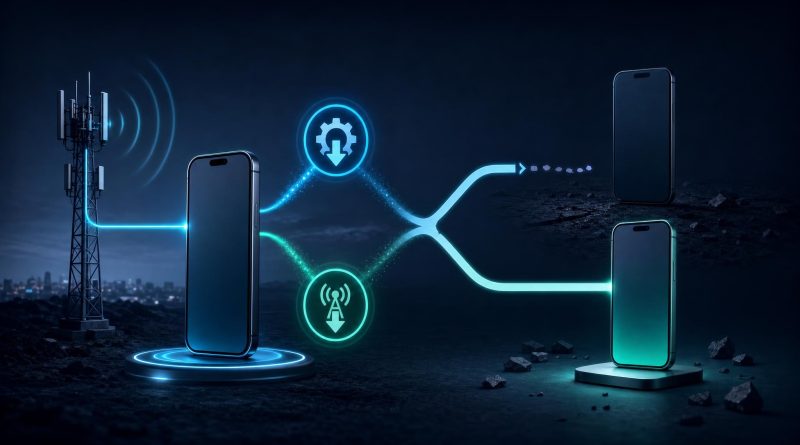
For phones that remain connected, Apple and AT&T say two updates used together are intended to help prevent the failure: iOS 27.0.1 and AT&T carrier settings version 72.1. Neither company has published data showing how effectively the combination prevents new failures.
The confirmed scope is narrow. The available guidance concerns some iPhone 18 Pro Max phones using AT&T, not every unit of that model. Apple and AT&T have not identified affected serial numbers, production dates, storage configurations, colours or model number ranges.
What owners should check
An AT&T customer whose iPhone 18 Pro Max still has service should confirm that the phone is running iOS 27.0.1 and has AT&T carrier settings 72.1. The two updates form the preventive response described by Apple and AT&T, so installing only one does not follow the complete official guidance.
AT&T instructs owners to open Settings, select General and then About. If a carrier settings update is available, the phone should offer it for installation. Users can also check the carrier entry on that screen to confirm whether version 72.1 is present.
Apple released iOS 27.0.1, build 24A446, on 28 September. Its public release notes list fixes involving Face ID after a restart, camera artefacts and Notification Centre or Control Centre, but do not mention the AT&T cellular condition. Later guidance from Apple and AT&T nevertheless identifies that iOS release as part of the preventive response.
Prevention is not recovery
The most important distinction is whether a phone still has service. The updates are intended to help stop the condition from occurring. They are not documented as a way to reactivate an iPhone 18 Pro Max that has already entered the failed state.
AT&T says a phone already without service cannot be reactivated and requires hardware replacement. It directs affected customers to Apple or AT&T support, or to one of the companies’ stores. That means repeatedly applying the updates is not the official recovery path once the documented failure has occurred.
This guidance also explains why reports that iOS 27.0.1 did not restore an affected phone do not necessarily contradict the recommendation to update. A preventive measure can remain relevant to a working device even when it cannot reverse an existing failure. Apple and AT&T have not said whether replacement is required because component repair is technically impossible or because replacement is the supported customer remedy.
What the 911 warning means
AT&T says the condition may affect 911 calls, making the problem more consequential than an ordinary interruption to mobile data. The warning does not establish that every affected phone will fail to complete every emergency call, but users should not assume that emergency connectivity will remain dependable after AT&T service is lost.
Apple’s general support guidance says an SOS indicator means an iPhone is not connected to its normal carrier. In Australia, Canada and the United States, an emergency call may still be available through another carrier’s network. That fallback depends on another network being available and on the phone’s precise failure state, neither of which has been documented for every affected device.
An SOS indicator therefore does not, by itself, prove that an emergency call will fail. It also does not guarantee that one will succeed. AT&T’s specific warning about this service condition and Apple’s general explanation of emergency fallback address different parts of the same connectivity problem.
No documented Australian carrier impact
The iPhone 18 Pro Max went on sale in Australia and the United States on 18 September, but the confirmed service problem concerns some devices on the US AT&T network. No impact on an Australian carrier is documented in the available guidance, so the warning should not be generalised to locally used phones or networks.
That limited scope does not establish that broader impact is impossible. Apple and AT&T have not published a comprehensive global incident dataset. On the evidence available as of 5 October, however, Australian owners without an AT&T connection have not been identified as part of the affected group.
Important questions remain unanswered
Apple and AT&T have not disclosed the root cause, and there is no factual basis for attributing the failure to a modem, eSIM provisioning, firmware, manufacturing or network change. They have also not provided an exact incident count, an affected production range or measurements of the updates’ preventive effectiveness.
The public guidance does not specify replacement costs, warranty treatment, stock availability or turnaround times. Apple has not announced a formal service programme, and it is not known whether replacement units come from a different production batch or whether the condition could recur.
For now, the practical divide is clear: an AT&T iPhone 18 Pro Max that still works should have both identified updates, while one that has already lost service should be taken to Apple or AT&T for replacement assistance.
Mobile service guidance becomes clearer when prevention and recovery are treated as separate tasks. For a structured next step, turn to The Hack Academy’s online cybersecurity training programme and study networking and cybersecurity fundamentals at your own pace, pairing practical exercises with theory.
