
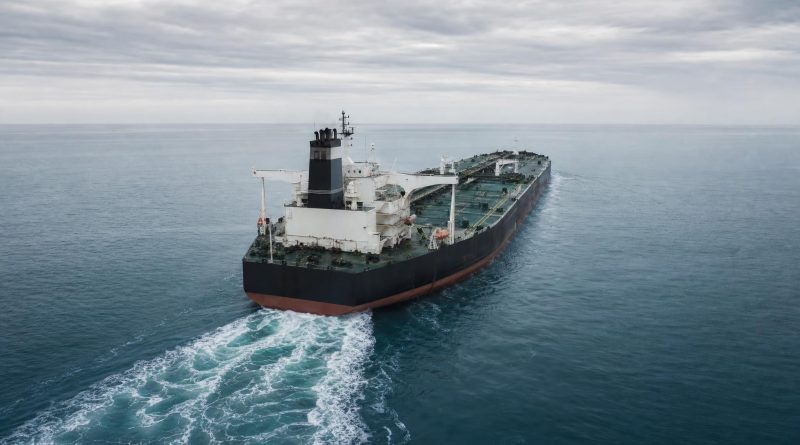
VL Prosperity intruders reportedly reached digital propulsion system
Bloomberg News reported on 2 October 2026 that US investigators found evidence of temporary unauthorised access to the digital propulsion system of the oil tanker VL Prosperity.
The report attributed the finding to unnamed US officials familiar with the investigation. Its sources said investigators had not determined how the intruders gained access, how long it lasted, who was responsible or which ship functions were available to them.
The propulsion finding adds a significant detail to an incident that US authorities had previously described only as a compromise of vessel networks. It places the reported access within safety-critical technology, but does not establish that the intruders controlled the tanker’s propulsion, issued commands or caused any physical change.
No public forensic report or supporting technical evidence has been released. For Bloomberg’s October report, the US Coast Guard declined to comment on the propulsion-specific finding, while the FBI referred to the agencies’ earlier joint statement.
What authorities have confirmed
That joint FBI and Coast Guard statement said specialist teams boarded two inbound, foreign-flagged commercial vessels in the Gulf of Mexico on 21 and 24 August 2026. The boardings followed indications that the networks of both ships had been compromised.
The agencies said there were no reports of operational disruption, vessel instability, physical danger to crews or environmental impact. Their public statement did not identify propulsion, navigation, cargo handling or any other specific operational function as affected.
Industry and news reports identified the first vessel as the VL Prosperity, a 333-metre, Liberian-flagged very large crude carrier. It was sailing from Egypt towards Galveston with roughly 2.3 million barrels of crude.
Before Bloomberg’s 2 October update, specialist analyses from Dragos and Maritimeinfosec.org said the available official material confirmed malicious activity affecting vessel networks but did not publicly establish a compromise of propulsion or another particular operational function. Bloomberg’s later account therefore narrows the reported location of the access, although the underlying investigative evidence remains unpublished.
Access is not the same as control
The distinction between reaching a system and controlling its operation is central to interpreting the case. Bloomberg reported temporary access, but the available account does not reveal the intruders’ privileges or which functions they could use. It also does not show that they could steer, accelerate, stop or otherwise command the tanker.
Earlier Bloomberg reporting, published on 17 September, cited a CISA official who said several vessels had been targeted in potential attacks but that the attackers did not appear to have taken control of the ships themselves. The public record does not show whether that assessment covered the VL Prosperity, other vessels or an earlier stage of the investigation. In any case, access does not by itself establish operational command.
The lack of reported physical or environmental consequences limits what can responsibly be said about the incident’s impact. It does not make unauthorised access to a safety-critical system insignificant, but it rules out presenting the available evidence as proof of a loss of vessel control or a narrowly avoided disaster.
Earlier machinery claims remain unverified
Iranian outlets reported on 20 August 2026 that an attack had occurred near the Strait of Gibraltar on 7 August. They alleged a 30-hour communications outage and manipulation of engine-room systems, including changes affecting engine speed and cooling flow.
Those specific claims have not been independently corroborated by the public evidence reviewed. Bloomberg’s narrower report of temporary propulsion-system access does not validate the wider account of communications loss or machinery manipulation. No released technical evidence connects the reported access with each of the effects alleged by the Iranian outlets.
The agencies’ statement that no operational disruption, instability, crew danger or environmental impact had been reported stands in contrast to those earlier allegations. The statement describes reported consequences rather than a complete public forensic conclusion, but it remains the clearest official account of impact.
A wider monitoring effort
US scrutiny extended beyond the VL Prosperity. Bloomberg reported on 17 September that US agencies were monitoring cyber threats involving nearly 20 ships and had requested advance notice before any of them entered a US port.
The public record does not establish that those ships, the two boarded vessels and the VL Prosperity propulsion access were all part of one coordinated campaign. Nor does it establish common infrastructure, techniques or a shared actor connecting the cases.
No agency has publicly attributed the VL Prosperity intrusion to a state, criminal group or other responsible party. The motive also remains unknown.
Several basic technical questions consequently remain open: the initial access route, the affected equipment, the intruders’ privilege level, the duration of access and any remediation carried out afterwards. Until authorities release more evidence, the supported conclusion is limited but consequential: investigators reportedly found access to propulsion technology, while operational control and physical manipulation remain unproven.
Safety-critical ship technology offers a useful context for asking what different privilege levels would allow, without assuming operational command from access alone. For broader grounding, explore The Hack Academy's online cybersecurity training programme; its self-paced learning covers cybersecurity fundamentals and networking, with practical exercises alongside theory.
